
Choosing the right hair origin is one of the most confusing parts of buying extensions, which is why so many buyers search for a clear Vietnamese hair vs Indian hair vs Chinese hair comparison before making a purchase. Each origin has distinct characteristics in texture, processing methods, and durability, and understanding these differences can save you from a costly mismatch between expectation and reality. This guide compares all three sourcing origins side by side so you can make an informed decision.
Why Hair Origin Matters
Human hair extensions are sourced from donors around the world, and each region’s natural hair characteristics — shaped by genetics, diet, and hair care habits — directly affect the final product. Origin influences texture, density, how well the hair holds color, and ultimately how long the extensions last. This is separate from concepts like Remy vs non-Remy hair or virgin vs processed hair, which relate to how the hair is collected and treated rather than where it comes from — though the two factors often go hand in hand with reputable suppliers.
Vietnamese Hair
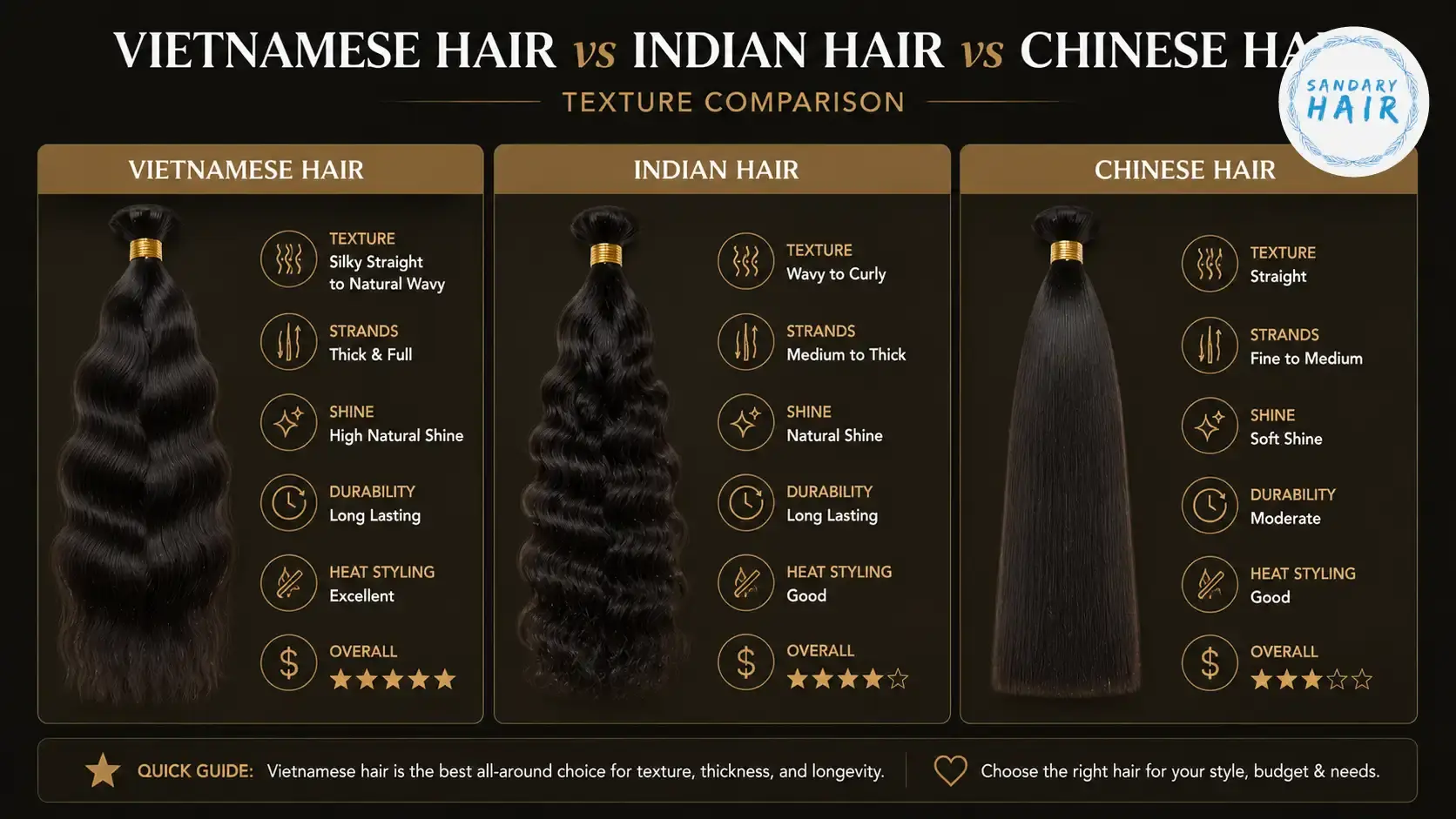
Vietnamese hair is known for being naturally straight to slightly wavy, with a medium density that blends easily with a wide range of natural hair types worldwide. Because of local diet and hair care practices, Vietnamese donor hair often arrives in healthier condition, requiring minimal chemical processing before it’s ready for sale — which is why so much of it is available as Virgin Vietnamese hair. It’s also prized for its natural shine and ability to hold color well without excessive damage.
Indian Hair
Indian hair, often sourced through temple donations, tends to be naturally wavy to curly with a coarser texture and higher density than Vietnamese hair. It’s widely used for clients who want extra volume or who have naturally curlier hair textures that need to blend seamlessly. However, Indian hair is frequently steam-processed to achieve a uniform texture, which can involve chemical treatment that shortens its overall lifespan compared to unprocessed virgin hair.
Chinese Hair
Chinese hair is typically thicker and coarser in its natural state compared to both Vietnamese and Indian hair. To make it more marketable for a wider range of customers, it’s often chemically treated to reduce thickness and add wave or curl patterns that don’t occur naturally. This heavy processing means Chinese hair extensions, while often sold at lower price points, tend to have a shorter usable lifespan and are more prone to tangling once the coating wears off — a pattern similar to what happens with non-Remy hair in general.
Vietnamese Hair vs Indian Hair vs Chinese Hair: Comparison Table
| Feature | Vietnamese Hair | Indian Hair | Chinese Hair |
|---|---|---|---|
| Natural Texture | Straight to slightly wavy | Wavy to curly | Straight, coarse |
| Density | Medium | High | High |
| Processing Level | Minimal, often virgin/raw | Moderate, often steam-processed | Heavy, often chemically treated |
| Durability | High | Moderate to high | Lower once processing wears off |
| Color Retention | Excellent | Good | Fair |
| Typical Price Range | Mid to premium | Mid to premium | Budget to mid |
Which Hair Origin Should You Choose?
If your priority is a natural, easy-to-blend texture with excellent durability and the ability to color and restyle repeatedly, Vietnamese hair — particularly Virgin Vietnamese hair — is generally the strongest overall choice. If you specifically need a naturally curly or wavy texture to match curlier natural hair types, Indian hair may be a better starting point, though it’s worth checking the level of processing before buying. Chinese hair can be a workable budget option for short-term or occasional use, but it’s not recommended for anyone wanting extensions that last beyond a few months, similar to how extension lifespan is shortened by heavy processing in general.
Does Origin Affect Single Drawn vs Double Drawn Options?
No — the choice between single drawn and double drawn hair is independent of origin and relates purely to how strands are sorted by length during production. You can find both single and double drawn options within Vietnamese, Indian, or Chinese hair lines, so this decision should be made separately based on the thickness and style you want.
A Note for Salons and Wholesale Buyers
For salon owners and resellers, sourcing consistency matters just as much as texture. Suppliers who source directly from a single, verified origin — such as a dedicated Vietnamese hair factory — tend to offer more predictable quality batch to batch than suppliers who blend multiple origins together. This consistency is especially valuable for anyone building a wholesale hair extensions business, where customer trust depends on repeatable quality.
Frequently Asked Questions
Which is better, Vietnamese hair or Indian hair?
It depends on your texture needs. Vietnamese hair offers a naturally straight-to-wavy texture with excellent durability, while Indian hair provides a naturally curlier texture better suited for clients with coarser or curlier natural hair. Both can be high quality if sourced as virgin or Remy hair.
Why is Chinese hair usually cheaper?
Chinese hair is typically thicker and coarser in its natural state, requiring more chemical processing to achieve a marketable texture. This processing reduces production costs per unit but also shortens the hair’s lifespan compared to less-processed origins like Vietnamese hair.
Can I mix hair from different origins in one installation?
It’s generally not recommended, as different origins can have slightly different textures, weights, and reactions to styling products, which may cause visible inconsistency. Sticking to a single origin, such as Vietnamese hair throughout, typically produces a more seamless, natural-looking result.
Conclusion
When comparing Vietnamese hair vs Indian hair vs Chinese hair, the right choice ultimately depends on your desired texture, budget, and how long you need the extensions to last. For buyers prioritizing durability, natural shine, and styling versatility, Vietnamese hair remains the strongest all-around option. Explore our Vietnamese hair extensions collection to experience the quality difference firsthand.