
Understanding single drawn vs double drawn hair is essential before buying your next set of extensions, because this distinction affects thickness, price, and overall appearance far more than most buyers realize. These terms describe how hair strands are sorted by length during production, and choosing the wrong one can leave you with extensions that look either too thin or unnaturally bulky. This guide breaks down exactly what each term means and which option suits your hair goals.
What Is Single Drawn Hair?
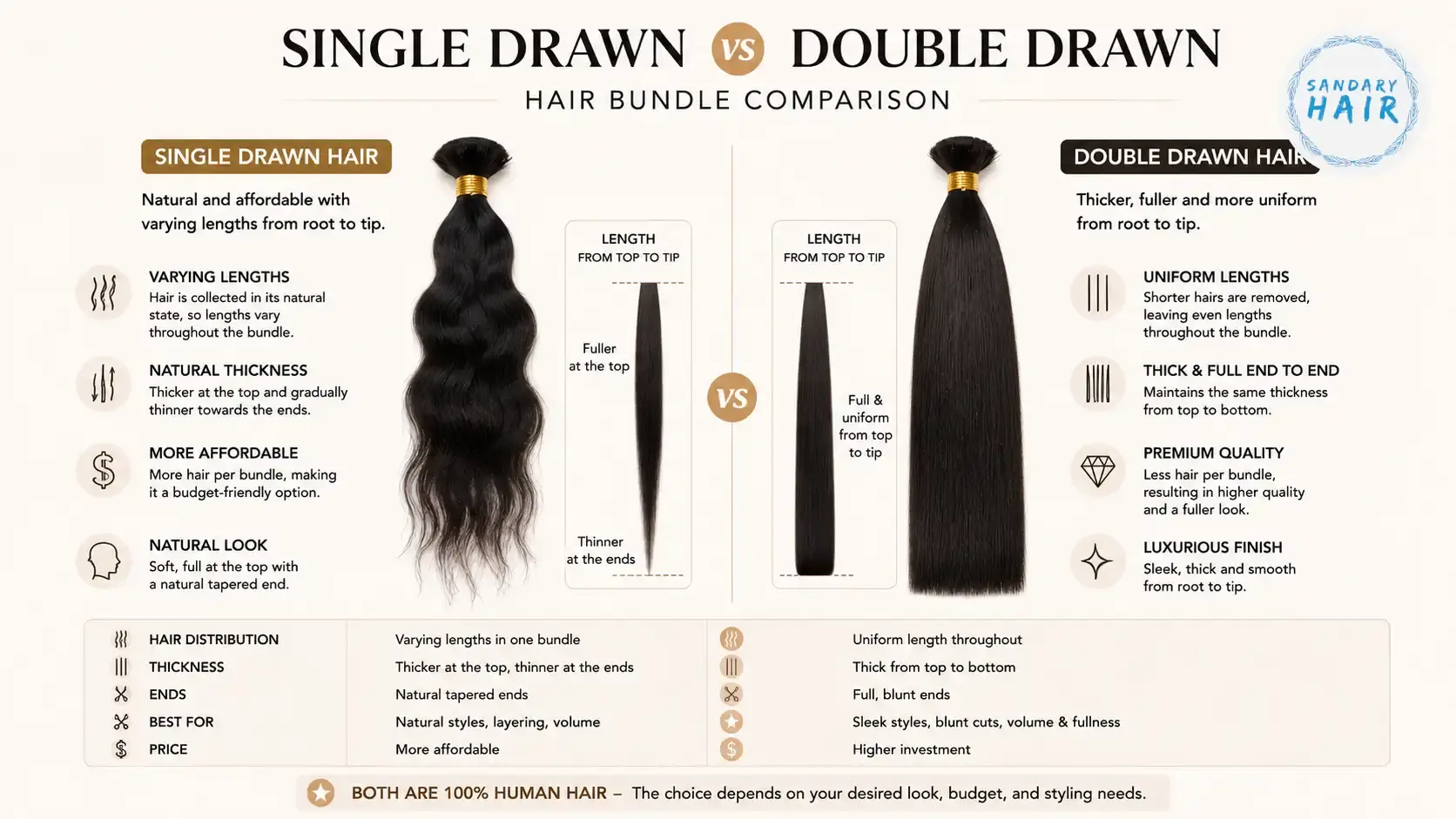
Single drawn hair contains a natural mix of shorter and longer strands within the same bundle. During collection, the hair is sorted just once, meaning shorter strands are left in along with the longer ones. This results in a more layered, tapered look at the ends — similar to how natural hair grows out over time. Single drawn bundles are generally lighter in weight, more breathable, and more affordable than their double drawn counterparts.
What Is Double Drawn Hair?
Double drawn hair goes through an additional sorting process where the shorter strands are manually removed, leaving mostly full-length strands throughout the entire bundle. This extra labor-intensive step creates a thick, blunt-cut appearance from top to bottom, with consistent volume maintained all the way to the ends — a texture many customers associate with a fuller, more dramatic look.
Single Drawn vs Double Drawn Hair: Key Differences
| Feature | Single Drawn Hair | Double Drawn Hair |
|---|---|---|
| Thickness at the Ends | Tapered, thinner | Thick, blunt, full |
| Weight per Bundle | Lighter | Heavier due to higher hair density |
| Price | More affordable | Higher, due to extra sorting labor |
| Best For | Natural, layered styles | Ponytails, clip-ins, thick blunt styles |
| Appearance | Soft, gradual taper | Uniform thickness top to bottom |
Which One Should You Choose?
If you want a natural, effortless look with soft, gradually tapered ends that blend seamlessly with your own hair, single drawn hair is the better option — it’s also the more budget-friendly choice for those trying extensions for the first time. If you’re after maximum volume and a fuller silhouette, especially for clip-in hair extensions or thick ponytails, double drawn hair delivers a noticeably more dramatic, salon-quality result.
Single Drawn vs Double Drawn: Which Extension Types Use Each?
- Weft Hair: Available in both single and double drawn — check our weft hair collection for options.
- Clip-In Extensions: Often made with double drawn hair for maximum fullness — browse clip-in extensions.
- Tape-In Extensions: Typically single drawn for a lighter, more natural blend — see our tape hair collection.
- Bulk Hair: Available in both, depending on the intended use — explore bulk hair options.
A Note for Wholesale Buyers and Salon Owners
Understanding drawn types is especially important for salon owners and resellers, since customers often expect a specific texture based on the product description. Always clarify with your supplier whether a bundle is single or double drawn before listing it for sale, and consider offering both options to serve different customer preferences. If you’re sourcing in bulk, our guide on wholesale hair extensions covers additional factors to evaluate before placing a large order.
Does Drawn Type Affect Hair Quality?
No — single drawn and double drawn are purely about length sorting and have nothing to do with whether the hair is Remy, Virgin, or non-Remy. You can find high-quality Virgin Vietnamese hair in either single or double drawn form. The drawn type only affects the visual thickness and price, not the durability or authenticity of the hair itself.
Frequently Asked Questions
Is double drawn hair better than single drawn hair?
Neither is inherently “better” — they simply serve different purposes. Double drawn hair offers more volume and a fuller look, while single drawn hair provides a more natural, tapered appearance at a lower price point.
Why is double drawn hair more expensive?
Double drawn hair requires an additional manual sorting process to remove shorter strands, which increases both labor time and the amount of raw hair needed to produce the same length bundle, driving up the overall cost.
Can I mix single drawn and double drawn hair in one installation?
Yes, many stylists blend single drawn wefts for the mid-lengths with double drawn wefts near the ends to achieve both a natural taper and added fullness. This technique is common in professional salon installations.
Conclusion
Both single drawn vs double drawn hair options have their place depending on the style you’re going for — single drawn for natural, effortless movement, and double drawn for maximum volume and thickness. Browse our full hair extension collection to find bundles available in both options, sourced from 100% Vietnamese Remy hair.