Keratin bond hair extensions are among the most natural-looking and long-lasting extension methods available, but with four common bond shapes — I-Tip, U-Tip, V-Tip, and Flat-Tip — choosing the right one can feel overwhelming. Each bond type is applied differently and suits different hair densities, textures, and styling goals. This guide breaks down exactly how each type works so you can choose the best fit for your needs.
What Are Keratin Bond Hair Extensions?
Keratin bond extensions consist of individual strands or small clusters of hair pre-tipped with a keratin protein bond. Using a heated fusion tool, a stylist melts the keratin bond and fuses it directly onto a small section of natural hair, creating a strong, long-lasting attachment that moves naturally as your hair grows. Because each bond is applied individually rather than as a continuous track, keratin extensions offer some of the most seamless, natural results available.
I-Tip Extensions
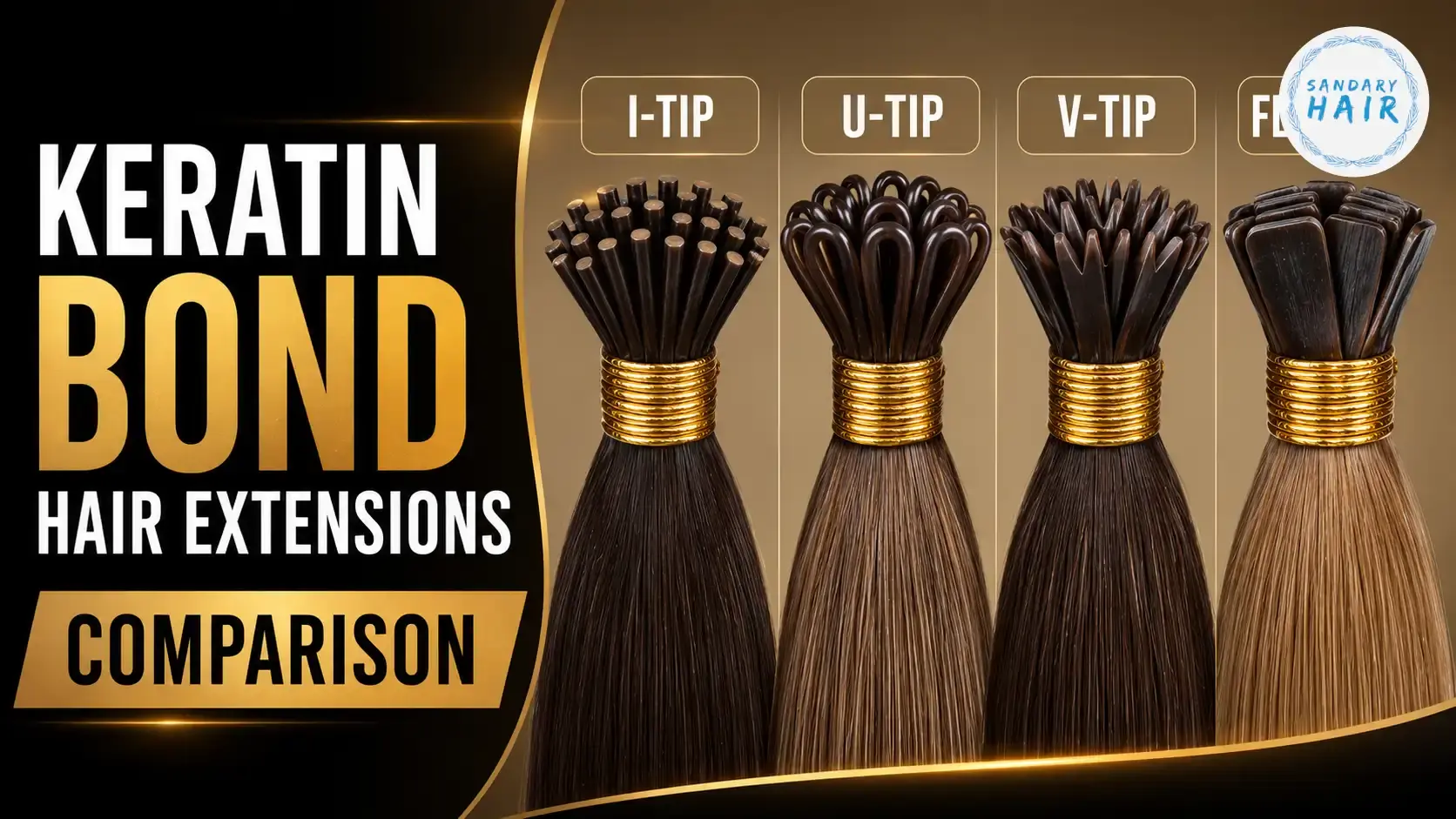
I-Tip extensions feature a straight, cylindrical keratin bond and are typically applied using a specialized micro-link tool or heat fusion connector rather than melting, making them a popular “cold fusion” alternative. They’re lightweight, versatile, and can be removed without heat, making them gentler for repeated use.
U-Tip Extensions
U-Tip extensions have a U-shaped keratin bond that is fused using a heated tool. This shape allows the bond to wrap slightly around the natural hair section, creating a secure, discreet attachment that’s especially popular for adding both length and volume.
V-Tip Extensions
V-Tip extensions use a V-shaped bond, similar in application to U-Tips but with a slightly different bond profile that some stylists find easier to conceal, particularly for clients with finer natural hair.
Flat-Tip Extensions
Flat-Tip extensions feature a wider, flattened keratin bond that distributes tension across a broader surface area rather than a single point. This makes them a popular choice for clients with fine or thinning hair, since the flat shape reduces stress on individual strands and minimizes the risk of breakage.
Keratin Bond Types Compared
| Type | Bond Shape | Application Method | Best For |
|---|---|---|---|
| I-Tip | Straight, cylindrical | Micro-link or cold fusion | Lightweight, low-heat application |
| U-Tip | U-shaped | Heat fusion | Volume and length |
| V-Tip | V-shaped | Heat fusion | Fine natural hair, easy concealment |
| Flat-Tip | Wide, flat | Heat fusion | Thin or fragile natural hair |
How Keratin Bonds Compare to Other Extension Methods
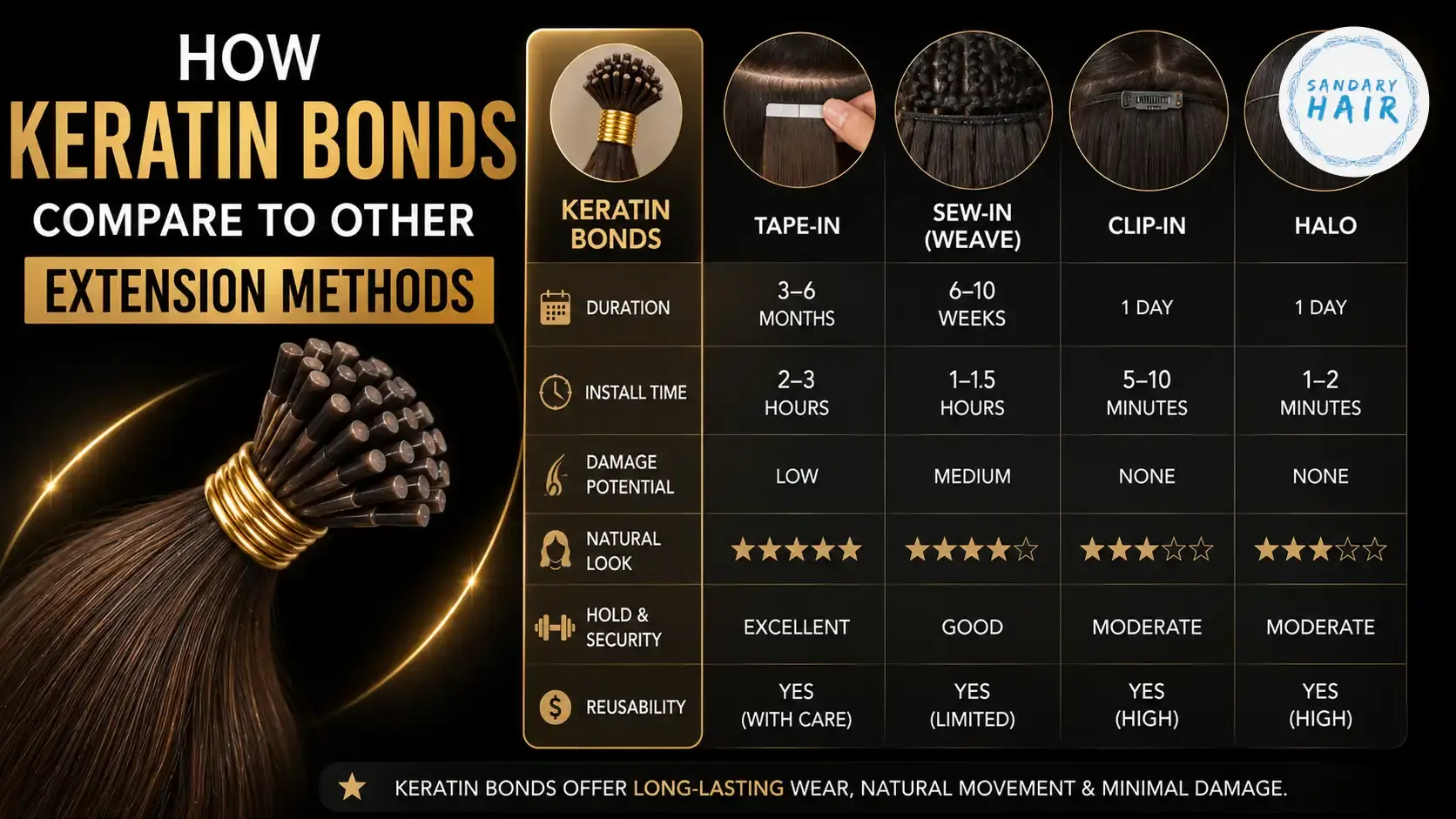
Unlike tape-in extensions, which attach in wider sections, keratin bonds are applied strand by strand, offering more natural movement but requiring a longer initial installation time. Compared to sew-in weft hair, keratin bonds don’t require braiding and tend to feel lighter on the scalp, though they generally come at a higher cost per application due to the detailed, individual bonding process.
How Long Do Keratin Bond Extensions Last?
A single keratin bond application typically lasts 3 to 6 months before the bonds need to be redone due to natural hair growth shifting their position. The strands themselves, if made from quality Virgin Vietnamese hair, can often be reused for a second or third application. For a full comparison across extension types, see our guide on how long hair extensions last.
How to Remove Keratin Bond Extensions Safely
Removal requires a specialized keratin bond remover solution applied directly to the bond, followed by gentle sliding pressure using fusion pliers to break down the keratin without pulling on natural hair. For a complete step-by-step process, read our dedicated guide on how to remove keratin bond extensions safely.
Choosing the Right Hair Quality for Keratin Bonds
Because keratin bonds are worn for extended periods and require repeated heat exposure during installation and removal, hair quality matters even more than usual. Genuine Remy hair withstands this repeated handling far better than non-Remy alternatives, which tend to mat and shed prematurely around the bond area. Browse our keratin hair (I, U, V, Flat-Tip) collection for premium Vietnamese Remy options.
Frequently Asked Questions
Which keratin bond type is best for fine hair?
Flat-Tip and V-Tip extensions are generally recommended for fine or thinning hair, as their bond shapes distribute tension more evenly and reduce the risk of breakage compared to U-Tip or I-Tip bonds.
Do keratin bond extensions damage natural hair?
When applied and removed by a trained professional using the correct tools and technique, keratin bonds should not cause significant damage. Issues typically arise from improper removal or leaving bonds in far past the recommended timeframe.
Can keratin bond extensions be reused?
Yes, if removed carefully and the underlying hair is high quality, keratin bond strands can often be re-tipped and reused for a second or third application, making them a cost-effective long-term option.
Conclusion
Keratin bond hair extensions — whether I-Tip, U-Tip, V-Tip, or Flat-Tip — offer some of the most natural-looking, long-lasting results available when paired with high-quality hair and professional installation. Explore our keratin hair extensions collection to find the right bond type for your hair.