Tangled hair extensions are frustrating — and if you attack the knots the wrong way, you can snap strands, loosen bonds, and cut months off the life of an expensive set. With the right tools, the right order, and a little patience, you can remove even stubborn knots without breakage.
This guide explains how to detangle hair extensions safely, whether you wear clip-ins, tape-ins, wefts, or keratin bonds. The same principles apply to all 100% human hair extensions.
Why Hair Extensions Tangle More Than Natural Hair
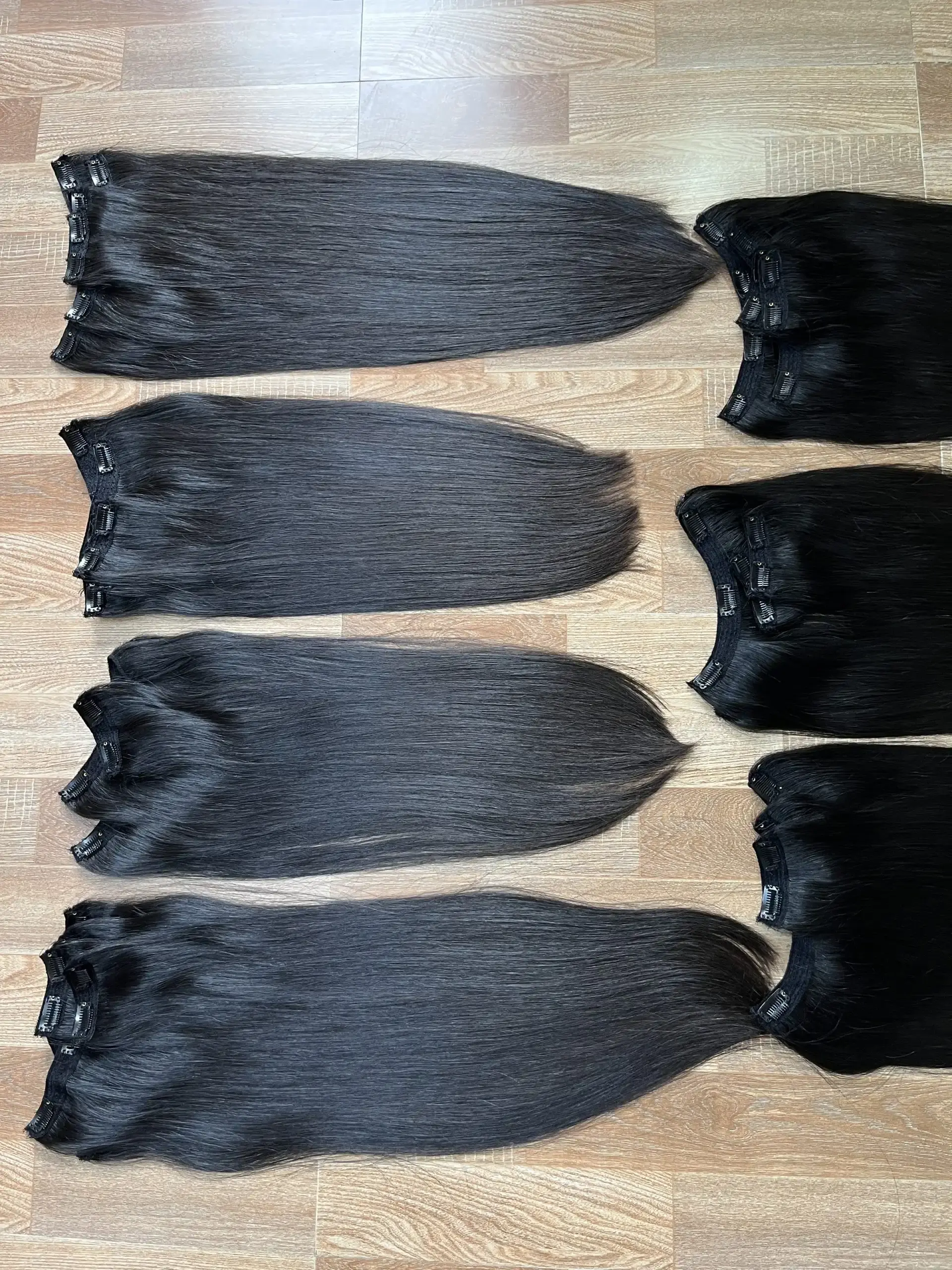
Your natural hair benefits from the oils your scalp produces. Those oils travel down the shaft and keep the strands smooth, so they slide past each other instead of catching. Hair extensions get no such protection: once hair is collected, cleaned, and sewn or bonded into wefts, clips, or tapes, it receives no natural oil at all. That is why extensions tangle more easily, especially at the nape of the neck, where friction from collars, scarves, and pillowcases is greatest. Dry ends and rough brushing make it worse, and long lengths tangle more than short ones. Some tangling is normal — the goal is removing it without breaking the shaft.
The Tools You Need (and the Ones to Avoid)
| Tool | Best for | Notes |
|---|---|---|
| Wide-tooth comb | Wet hair, first-pass detangling | The safest starting tool |
| Loop bristle brush | Daily brushing of installed extensions | Glides over bonds and wefts |
| Detangling spray / leave-in conditioner | Stubborn knots | Reduces friction before combing |
| Boar bristle brush | Smoothing finished, tangle-free hair | Only after detangling |
| Fine-tooth comb | Styling and parting only | Avoid for detangling — it snaps strands |
| Round brush | Blow-drying and styling | Never use on tangled hair |
How to Detangle Hair Extensions Step by Step
1. Remove clip-ins first. Take clip-ins out before detangling. Lay each weft flat and detangle it separately — brushing clip-ins while attached pulls on your natural hair and on the clips. For a full wash routine, see our guide on how to wash clip-in hair extensions properly.
2. Work in small sections. Divide the hair into 3–4 sections and clip the rest out of the way. A small section gives you control and stops you from dragging the comb through a large matted area.
3. Apply a detangling spray or leave-in conditioner. Lightly mist the section, focusing on the ends and the tangled area. Wait 30–60 seconds so the product can soften the knot — dry detangling creates friction, and a little slip makes a big difference.
4. Start from the ends and work upward. This is the golden rule. Hold the section firmly just above the knot so you are not pulling on the roots or the bonds, then comb gently through the bottom 5 cm. Once the ends are free, move a little higher and repeat. Never start at the roots — that pushes every knot into one tight mass at the ends.
5. Use your fingers for stubborn knots. If the comb stops, do not force it. Hold the knot between your fingers and gently pull the strands apart one by one. A little conditioner or a drop of argan oil helps it loosen.
6. Finish with a gentle brush. Only when the wide-tooth comb passes through the whole section smoothly should you switch to a loop bristle brush. Brush from the mid-lengths to the ends first, then from the roots down, holding the hair above the brush so the bonds and wefts take no tension.
7. Detangle before washing, not after. Wet hair is weaker and stretches more easily, so always detangle before you wash. After washing, use only a wide-tooth comb on damp, conditioned hair — never brush soaking wet hair with a regular brush.
Detangling by Extension Type
| Extension type | Key detangling tips |
|---|---|
| Clip-in | Remove before detangling; lay flat; hold the weft seam while combing |
| Tape-in | Never comb over the tape tabs; brush below the bonds only |
| Weft (sew-in) | Support the weft track with one hand while brushing the lengths |
| Keratin (I-tip, U-tip, flat-tip) | Keep the brush away from the bonds; work in thin sections |
| Wigs and toppers | Place on a stand; detangle from the ends up, holding the cap steady |
5 Mistakes That Cause Breakage
Brushing from the roots down. This is the number one mistake. It compresses knots and forces the brush to rip through them.
Detangling dry, product-free hair. Dry hair has maximum friction. A light mist of leave-in conditioner is not optional for long extensions.
Using a fine-tooth comb or a round brush on knots. Both are designed for styling, not detangling. They catch, pull, and snap.
Pulling through a knot instead of picking it apart. If the comb will not pass, stop. Fingers and patience save hair; force does not.
Sleeping with loose, unbrushed hair. Eight hours of tossing and turning creates the worst tangles of all. Detangle gently and braid your hair loosely before bed — and when you take extensions out, store them properly, as explained in our guide on how to store hair extensions between uses.
How to Prevent Tangles in the First Place
Brush your extensions two to three times a day with an extension-safe brush, starting from the ends. Keep the ends moisturised with a light leave-in conditioner or a drop of hair oil.
Wash with sulfate-free shampoo, and condition the lengths (never the bonds or tape tabs). Before swimming or exercising, braid your hair loosely and, where possible, wear a swim cap — chlorine and sweat both dry the hair and encourage matting. Finally, replace worn-out tools: a brush with bent bristles snags hair, and a comb with rough seams catches strands.
FAQ
Can I detangle hair extensions when they are wet?
Yes, but only with a wide-tooth comb and only after applying conditioner or a detangling spray. Wet hair is more fragile, so be gentler than on dry hair, and never use a regular paddle brush on soaking wet extensions.
What should I do with a severely matted section?
Do not cut it out first. Saturate the mat with conditioner, leave it for 10–15 minutes, then pick it apart slowly with your fingers from the outer edges. If it still will not loosen, trim only the matted ends as a last resort — or ask your stylist for help.
Does detangling damage 100% human hair extensions?
Correct detangling does not damage them. Breakage comes from force, the wrong tools, and starting at the roots. Done properly — ends first, small sections, supported bonds — detangling is simply part of normal care, and quality human hair can handle it for a year or more.
Conclusion
Detangling is where most extension damage happens, but it is also one of the easiest routines to get right. Start from the ends, work in small sections, use a wide-tooth comb and a little leave-in conditioner, and always support the bonds or weft track with your free hand.
If you are choosing extensions for a salon or a resale business, start with hair that is easy to maintain. Our Weft Hair is made from 100% Remy Vietnamese human hair with the cuticles aligned, so it stays smooth, resists tangling, and detangles cleanly wash after wash. Lengths run from 8 to 32 inches in all custom colours — contact us on WhatsApp at +84961898648 for wholesale pricing.