Why Heat Damages Hair Extensions Faster Than Natural Hair
One of the biggest advantages of 100% human hair extensions is that you can curl, straighten, and blow-dry them just like your own hair. Synthetic extensions melt under a flat iron — human hair does not. But extensions do not receive natural oils from your scalp, so they dry out and weaken faster than the hair growing from your head. Heat damage is also cumulative and irreversible — once the cuticle is scorched, no conditioner can fully restore it. The good news: heat styling is perfectly safe when you control the temperature, use a protectant, and follow a few simple rules. This guide gives you the exact numbers.
Safe Temperature Guide for Heat Styling Hair Extensions
Fine hair burns at temperatures thick hair handles easily, and chemically treated hair needs even more care. Use this table as your starting point — and always begin at the lowest temperature that gets the job done.
| Hair Type | Flat Iron / Curling Iron | Blow Dryer |
|---|---|---|
| Fine or thin hair | 120–150°C (250–300°F) | Low to medium heat |
| Medium hair | 150–180°C (300–350°F) | Medium heat |
| Thick or coarse hair | 180–200°C (350–390°F) | Medium to high heat |
| Bleached, dyed or toned hair | 120–160°C (250–320°F) | Low to medium heat |
| Near keratin or tape bonds | Keep tools away — max 180°C | Low heat, never direct |
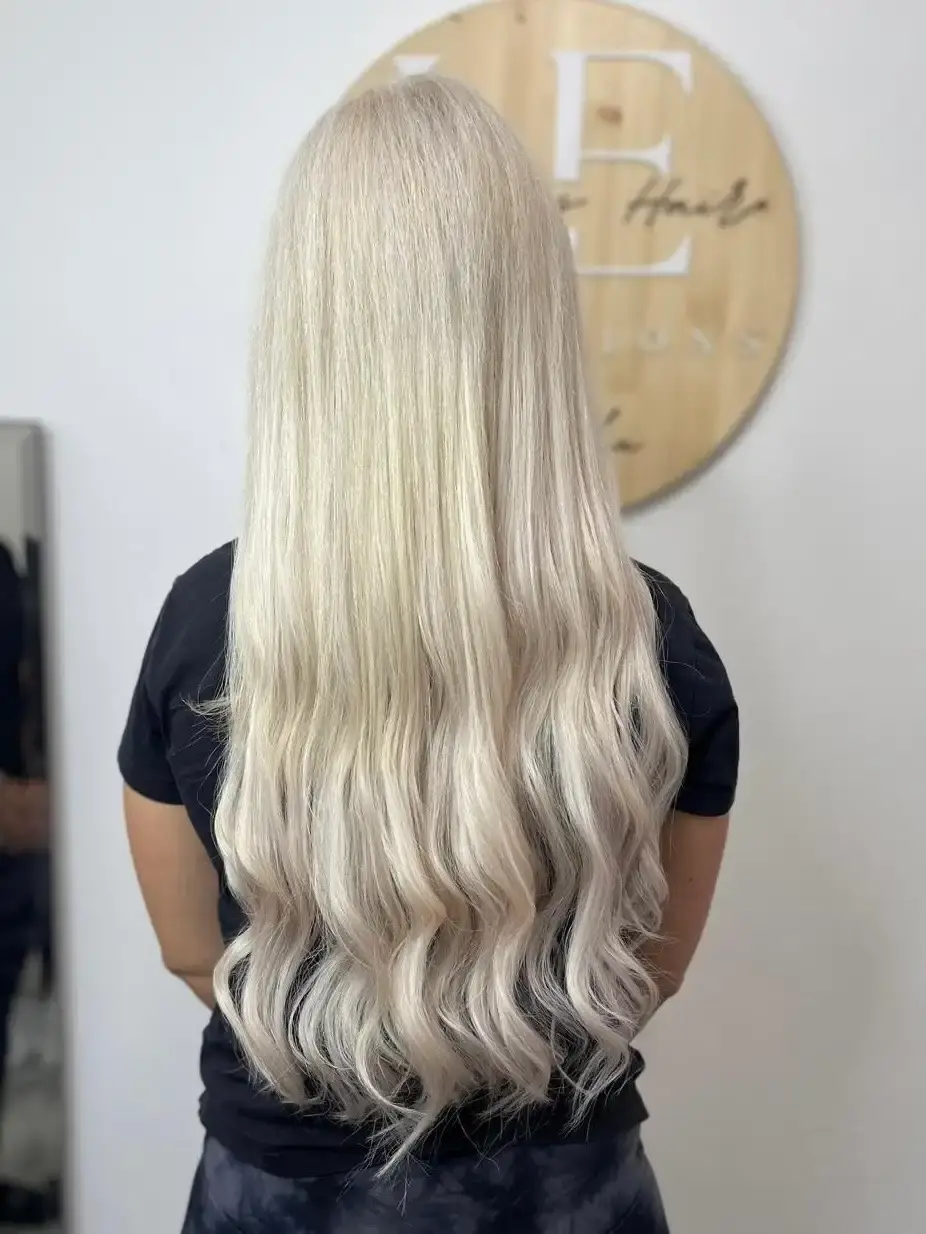
The absolute ceiling for human hair extensions is 210°C (410°F). Above that, the keratin protein inside the hair shaft starts to break down and the cuticle cracks. If your tool only shows a 1-to-10 dial, treat 5–6 as medium heat and never push past 7.
Vietnamese human hair, like the hair Sandary supplies, is naturally thick and strong, so it usually styles well at 160–180°C. Bleached or lightened hair behaves like fine hair and needs the lower range. If you have recently coloured your extensions, read our guide on dyeing, bleaching and toning human hair extensions before reaching for a hot tool.
Heat Protectant Is Non-Negotiable
A heat protectant spray or serum is the single most effective thing you can do to prevent damage. It coats each strand with a thin barrier that slows moisture loss and spreads the heat evenly. Apply it to damp hair before blow-drying and again lightly to dry hair before flat ironing or curling.
Choose a lightweight, alcohol-free product. Heavy oils and silicone-loaded serums build up on extensions and make them look greasy, especially near the bonds. Spray from mid-length to ends and use less near the roots. Never apply protectant to soaking wet hair and then clamp a flat iron over it: trapped water turns to steam inside the hair shaft and causes bubble damage.
How to Heat Style Extensions Safely, Step by Step
1. Detangle first, gently. Never run a hot tool through knotted hair — the iron catches, pulls, and snaps the strands. Brush from the ends upward with a wide-tooth comb or a loop brush. Our full guide to detangling hair extensions without breakage shows the exact technique.
2. Start with completely dry hair. Flat irons and curling irons belong on dry hair only. If you blow-dry first, use a nozzle, keep the dryer moving, and hold it at least 15 cm from the hair.
3. Work in small sections. Sections about 2–3 cm wide let the heat distribute evenly, so one slow pass is enough. Wide sections force repeat passes, and every extra pass adds damage.
4. One slow pass, not five fast ones. Glide the iron steadily from mid-length to ends. Do not clamp and hold it in one spot, and do not go over the same section again and again.
5. Keep heat away from the attachment points. With tape-ins, stop at least 2 cm below the tape. With keratin bonds, never clamp over a bond — heat softens the keratin and the bond slips. With clip-ins, take them out before high-heat styling. If you wash tape-ins, see our tape-in washing guide.
6. Let the style cool before touching it. Curls and waves set as they cool. Brushing hot hair breaks the shape and roughs up the cuticle.
Flat Iron vs Curling Iron vs Blow Dryer
Not all hot tools are equally risky. A blow dryer with a nozzle is the gentlest option because the heat is diffused and the tool never clamps the hair. A flat iron is the most intense because two hot plates press directly onto the strand — use ceramic or tourmaline plates, which heat more evenly than bare metal. A curling iron sits in the middle: it wraps hair around a hot barrel without squeezing it. Cheap tools often run 20–30°C hotter than the dial claims, and a tool with no temperature control at all is not safe for extensions.
5 Mistakes That Ruin Hair Extensions
Styling wet hair. Water inside the shaft boils under a flat iron and leaves the hair brittle. Always dry first.
Daily maximum heat. Straightening at 230°C every morning will destroy even the best hair within weeks. Save high heat for special occasions.
Skipping heat protectant. The most common and most avoidable mistake — no protectant means the full heat hits bare cuticle.
Ironing over bonds and tapes. Heat softens keratin bonds and loosens tape adhesive. Style below the attachment point, never on it.
Heat styling dirty hair. Product build-up bakes onto the strand under heat and leaves a sticky residue that attracts tangles. Wash when needed, dry fully, then style.
How Often Can You Heat Style Extensions?
For daily wearers, two to three heat-styling sessions per week is a realistic limit with protectant and moderate temperatures. Between sessions, use heat-free styles: loose braids, silk-wrapped buns, or flexi rods. If you must style every day, keep the temperature low and deep-condition weekly. When the ends feel rough despite good care, trim 1–2 cm — a small trim restores the look far better than more heat ever will.
FAQ: Heat Styling Human Hair Extensions
Can you use a flat iron on tape-in hair extensions?
Yes, but keep the iron at least 2 cm below the tape tabs and never clamp over them. Heat melts the adhesive and the tapes will slip.
What temperature is safe for Vietnamese human hair extensions?
Most Vietnamese hair styles well at 160–180°C (320–350°F). Fine or bleached hair needs 120–160°C. Never exceed 210°C (410°F) on any human hair extension.
Can you curl keratin hair extensions?
Yes. Keratin tip extensions are 100% human hair and curl beautifully at 150–180°C. Keep the iron away from the bonds, and let each curl cool for a few seconds so it holds longer.
How do I fix heat-damaged extensions?
Trim the worst ends, deep-condition weekly, and stop heat styling for two weeks. Mild damage improves; severely scorched hair cannot be repaired and should be replaced.
Conclusion
Heat styling human hair extensions is safe when you respect the numbers: stay under 210°C, match the temperature to your hair type, always use a heat protectant, and keep hot tools away from bonds and tapes. One slow pass beats five fast ones, and dry hair plus a good tool beats maximum heat every time.
If you are choosing extensions that can handle regular styling, look at Sandary’s Keratin Hair Extensions (I, U, V, Flat Tips) — 100% Vietnamese Remy human hair in lengths from 8 to 32 inches, made to be curled, straightened, and styled again and again. Contact us on WhatsApp at +84961898648 for wholesale prices and custom colours.