One of the most common questions from first-time buyers is: “how long do hair extensions last?” It’s a fair question, especially given how much of an investment quality extensions can be. The honest answer is: it depends — on the type of extension, the quality of the hair, how well they’re cared for, and how often they’re worn. In this guide, we’ll break down realistic lifespan expectations for every major extension type, the key factors that affect longevity, and practical steps you can take to get the most value out of your purchase.
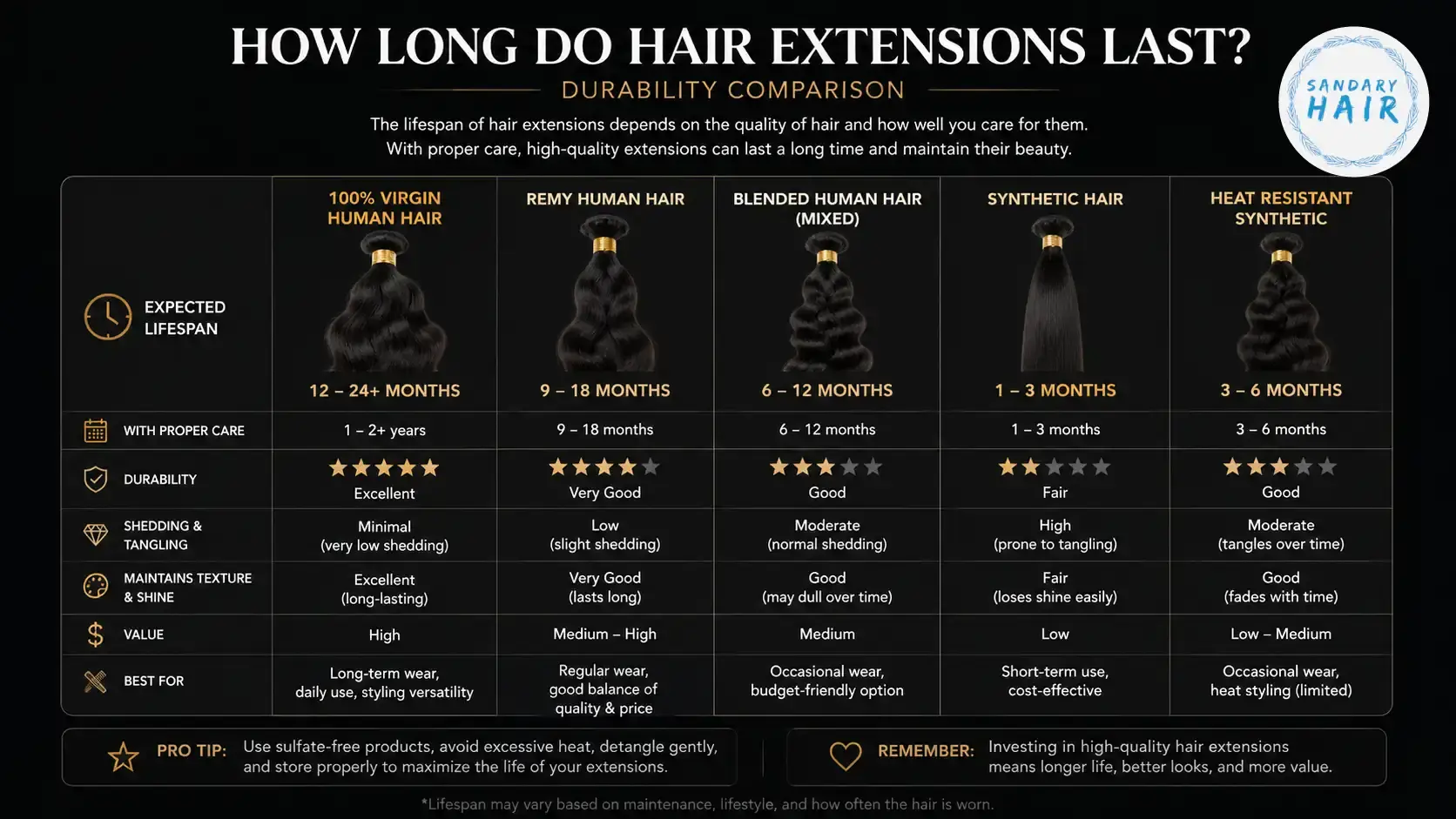
Average Lifespan by Extension Type
Different installation methods place different amounts of stress on both the extensions and your natural hair, which directly affects how long each type can be worn before needing replacement or reapplication.
Clip-In Extensions
Because clip-in extensions are only worn occasionally — for events, photoshoots, or specific outfits — they experience far less daily wear and tear than semi-permanent options. With proper storage in a cool, dry place away from direct sunlight, high-quality clip-ins made from Remy human hair can last 1 to 2 years, and sometimes longer if used sparingly.
Tape-In Extensions
Tape-in extensions typically need to be reapplied or “moved up” every 6 to 8 weeks as your natural hair grows, but the hair itself — if it’s genuine Remy or Virgin quality — can be reused for 6 to 10 months total across multiple reapplications, provided the tape adhesive is professionally replaced each time.
Keratin Bond Extensions (I-Tip, U-Tip, V-Tip, Flat-Tip)
Keratin bond extensions are fused to natural hair using a heated bonding tool, and each application generally lasts 3 to 6 months before the bonds need to be redone due to natural hair growth. Because the strands themselves are durable, the same hair can often be reused for a second or even third application if handled carefully during removal.
Weft Hair (Sew-In)
Weft hair installed via the sew-in method typically lasts 6 to 8 weeks per install before it needs to be taken down and redone, primarily due to natural hair growth shifting the position of the tracks. However, the wefts themselves — especially those made from Virgin Vietnamese hair — can be reused for a year or more across multiple installs.
Bulk Hair
Bulk hair, commonly used for braiding, fusion, or custom salon applications, doesn’t have a fixed “wear time” since it depends entirely on the technique used. However, the underlying hair quality still determines how many times it can be reused before it starts to shed or lose its texture.
Factors That Affect How Long Hair Extensions Last
Beyond the extension type itself, several other variables play a major role in determining lifespan — and understanding them can help you get significantly more value from your purchase.
1. Hair Quality (Remy vs Non-Remy, Virgin vs Processed)
This is by far the single biggest factor. Genuine Remy hair — where the cuticle remains intact and aligned — naturally resists tangling and shedding far longer than non-Remy hair, which is often coated in silicone that washes away within weeks. Similarly, Virgin Vietnamese hair, having never been chemically processed, retains its natural strength and elasticity much longer than hair that has already been stripped and reprocessed before sale.
2. Care Routine
Using sulfate-free shampoo, applying a deep conditioning treatment weekly, minimizing direct heat exposure, and always brushing gently from the ends upward toward the roots can significantly extend the usable life of your extensions. Neglecting these basics is one of the fastest ways to shorten lifespan regardless of hair quality.
3. Installation Method and Skill Level
Properly installed extensions distribute tension evenly across the scalp, reducing stress on both the extensions and your natural hair. Poor installation — whether too tight, too loose, or improperly sectioned — can cause premature shedding, breakage, or even damage to your natural hair that no amount of at-home care can fully offset.
4. Frequency and Type of Wear
Extensions worn daily, especially in humid climates or during frequent workouts, will naturally wear out faster than those reserved for occasional use. Constant friction, sweat, and product buildup all accelerate the breakdown of both the cuticle and the bond or adhesive holding the extensions in place.
5. Environmental Exposure
Chlorine from swimming pools, saltwater, prolonged sun exposure, and harsh weather conditions can all degrade hair extensions faster than normal indoor wear. If you swim regularly, wearing a cap or thoroughly rinsing extensions immediately afterward can help preserve their condition.
Signs It’s Time to Replace Your Extensions
- Noticeable shedding or thinning along the wefts or bonds
- Persistent tangling that doesn’t improve even after conditioning
- Loss of natural shine and softness, replaced by a dry, straw-like texture
- Visible breakage or split ends throughout the strands
- Difficulty holding a curl or style the way it used to
How to Maximize the Lifespan of Your Hair Extensions
Getting the most out of your investment comes down to a combination of choosing quality hair from the start and maintaining it consistently afterward. Here are the most effective habits to adopt:
- Always start with genuine Vietnamese Remy or Virgin hair extensions rather than unverified, low-cost alternatives.
- Wash extensions no more than 2 to 3 times per week using sulfate-free, extension-safe shampoo.
- Detangle gently with a loop brush, always starting from the ends and working upward.
- Use a heat protectant spray before any styling with hot tools, and keep temperatures below 180°C (350°F).
- Store clip-ins on a hanger or in a silk pouch to prevent tangling and dust buildup between uses.
- Sleep with hair braided or in a loose ponytail to minimize friction and tangling overnight.
Frequently Asked Questions
How long do hair extensions last on average?
On average, high-quality human hair extensions last anywhere from 6 months to over a year, depending on the installation method, hair quality, and how well they’re maintained. Clip-ins tend to last the longest since they experience the least daily wear.
Do cheaper hair extensions last as long as premium ones?
Generally, no. Cheaper extensions are often made from non-Remy or heavily processed hair coated in silicone, which tends to break down within a few weeks of regular washing. Investing in genuine Remy or Virgin hair typically pays off through significantly longer usable life.
Can hair extensions be reused after removal?
Yes, in most cases. Tape-ins, keratin bonds, and weft hair can often be reused multiple times if removed carefully by a professional and the hair itself is high quality. Clip-ins are inherently reusable since they don’t require any bonding or adhesive at all.
What shortens the lifespan of hair extensions the most?
Using harsh, sulfate-based shampoos, excessive heat styling without protection, sleeping with wet or loose hair, and choosing low-quality non-Remy hair are the most common causes of extensions wearing out prematurely.
Conclusion
So, how long do hair extensions last? The honest answer depends heavily on the type you choose and how well you care for them — but starting with genuine, high-quality Vietnamese Remy or Virgin hair gives you the best possible foundation for long-lasting results. Explore our full collection of human hair extensions to find durable, premium options built to last.